

Ask someone what defines a person, and they’ll likely start with the basics: appearance, tone of voice, and maybe even profession. But you and I both know it runs deeper than that. A person is a complex mix of emotions, traits, and behaviors — a whole personality that shapes how they show up in the world.
Now, ask the same about a brand.
A brand isn’t just its logo, colors, or tagline. It’s how it makes people feel, the tone it uses, the promises it keeps, and how it shows up in a crowded marketplace. In short, every brand has a personality. Just like people, brands with firm, authentic personalities stand out and stick.
Why Brand Personality Matters
We live in an age of oversaturation. Consumers are flooded with content and choices at every scroll, click, and turn. Clarity and resonance aren’t optional in that environment — they’re everything. A defined brand personality helps you cut through the noise and build an emotional connection.
It humanizes your business.
It signals who you are (and who you’re not).
It invites customers to align with you, not just transact with you.
The brands people remember are the ones they feel connected to — and personality is the bridge between product and emotional loyalty.
Aaker’s Framework: The Five Core Dimensions of Brand Personality
One of the most influential models in brand personality comes from Stanford professor and marketing expert Jennifer Aaker. Her research defines five core personality dimensions that brands typically express:
- Sincerity – Down-to-earth, honest, wholesome, cheerful
- Excitement – Daring, spirited, imaginative, up-to-date
- Competence – Reliable, intelligent, successful
- Sophistication – Elegant, refined, charming
- Ruggedness – Outdoorsy, tough, strong
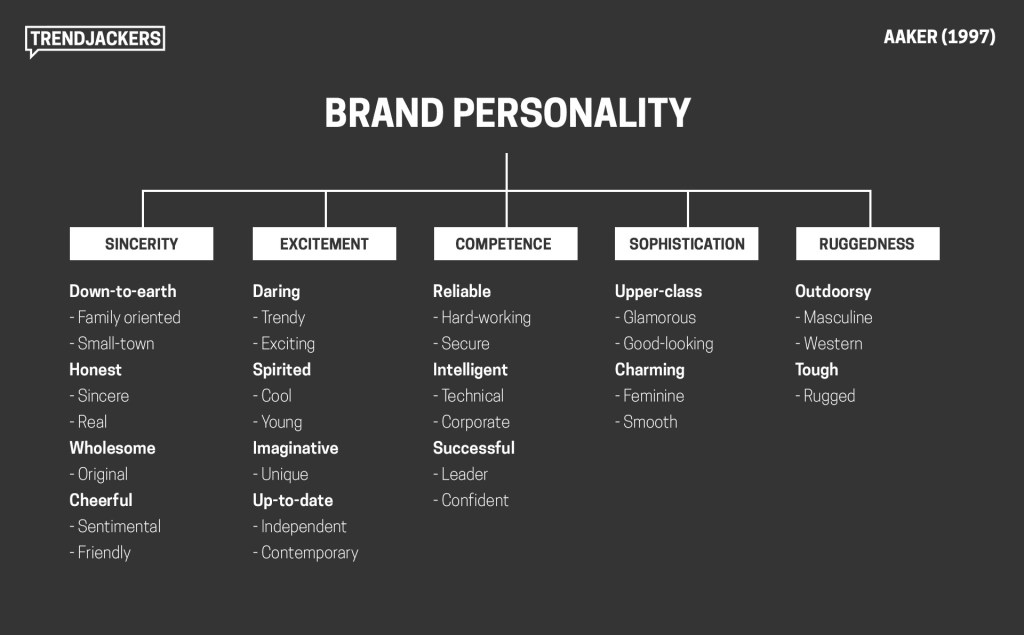
These dimensions aren’t boxes to check—they’re springboards for differentiation. Most enduring brands lean into one or two of these traits and consistently amplify them across every touchpoint: visuals, voice, behavior, and experience.
Turning Theory Into Action: How STAP Helps Define Brand Personality
At STAP, we take this concept beyond theory. We’ve built proprietary tools to help brands unlock and articulate their personality in a way that drives growth and resonance.
Through our Brandstorming Sessions, we guide clients through tailored exercises that surface their brand’s emotional and behavioral DNA. Two of our most impactful tools include:
- BrandBag™ – A hands-on discovery tool that helps leadership teams isolate core traits, tone, and positioning through structured choice and debate. It’s playful — and revealing.
- Headed to the Party™ – A personality-mapping exercise that asks, “If your brand walked into a room, how would it act?” This creative framework helps clarify voice, visuals, and communication style with uncanny accuracy.
These aren’t fluff sessions. They’re grounded, strategic, and designed to align teams internally while creating a personality that resonates externally. The result? More cohesive branding, stronger creative execution, and a brand that feels like someone your audience already knows.
What Happens When You Don’t Define Your Brand Personality?
You leave perception up to chance.
Brands that don’t consciously define their personality often sound inconsistent, look generic, and struggle to connect. Their message drifts, their marketing underperforms, and their audience forgets them the moment they scroll away.
In contrast, brands with a defined personality appear confident and consistent across campaigns, content, customer service, and even culture.
How to Begin Defining Your Brand Personality
If you’re starting from scratch or revisiting a brand that feels stale, ask yourself:
- What does our audience say about us when we’re not in the room?
- What tone of voice feels most natural and aligned with who we are?
- Which of Aaker’s five dimensions feels most accurate to our brand today?
- Is our personality consistent across sales, marketing, and customer experience?
If these questions reveal some gaps or uncertainty, you’re not alone. Most brands grow faster than they evolve their identity. That’s why defining personality isn’t a one-and-done—it’s a brand health practice.
Final Thought: Your Brand Has a Personality — The Question Is, Are You Owning It?
In a world where attention is scarce, and trust is everything, brand personality is your shortcut to connection. It’s how customers recognize you, relate to you, and remember you.
At STAP, we help brands sound like themselves—not like everyone else. If you’re ready to define your brand’s emotional heartbeat and activate it across every channel, let’s talk. This is what we do.
 STAP BrandBlog